Green hydrogen is no longer an idea for tomorrow. It is fast becoming a cornerstone of the global clean-energy transition. But at World Hydrogen Week 2025 in Copenhagen, one message stood out above all others: hydrogen’s success will hinge not only on production technology but on infrastructure readiness.
The conversations were pragmatic, not theoretical. Delegates focused on how to move hydrogen from demonstration to deployment, how to integrate renewable generation, balance grids, and establish the transport and storage networks that will define hydrogen’s future.
Hydrogen can decarbonize heavy industry, power long-distance transport, and store renewable energy when the grid goes dark. Yet each of these roles depends on one thing: a reliable and connected infrastructure system that can carry energy where and when it is needed.
The Infrastructure Imperative
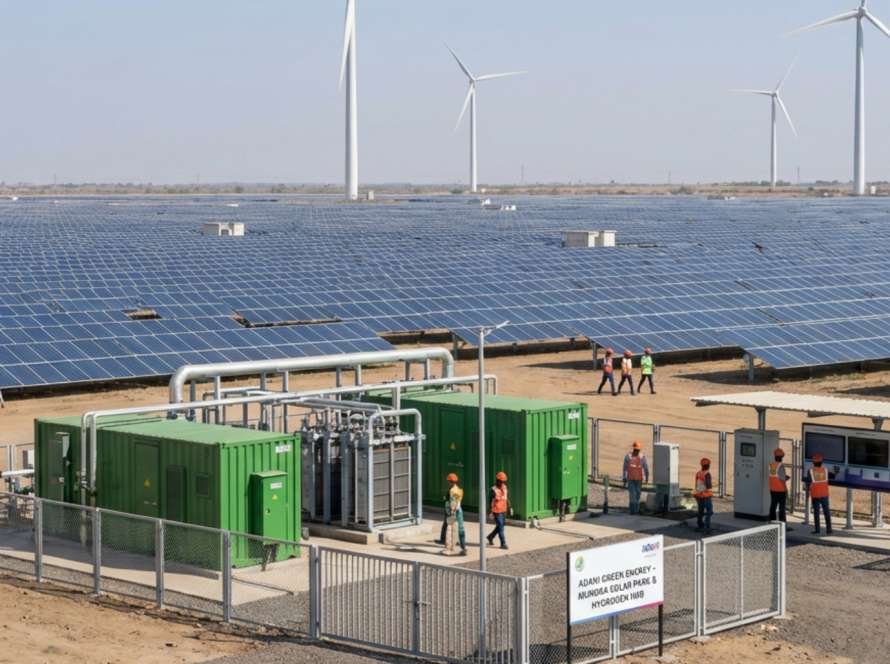
Infrastructure remains the missing link in the hydrogen value chain. The world has made rapid progress on electrolyzer efficiency and cost, but without the pipelines, power networks, and storage systems to support them, production capacity risks being stranded.
At Copenhagen, industry experts agreed that true scale requires an integrated view, one that connects electrons and molecules, grids and gases. Leveraging existing energy assets can accelerate deployment, lower costs, and build investor confidence.
The questions shaping the next phase are no longer about potential, they are about readiness:
Are power grids prepared for the load of large-scale electrolysis?
How will nations coordinate cross-border energy exchange?
Who pays for infrastructure upgrades, and how do we reduce risk for early investors?
A System-Wide Approach
A new generation of infrastructure strategies is emerging to answer these challenges. Utilities and developers are adopting end-to-end frameworks that connect planning, construction, and operation into a single, data-driven process.
Planning now begins with digital twins, feasibility modeling, and lifecycle analysis to anticipate grid-hydrogen interactions.
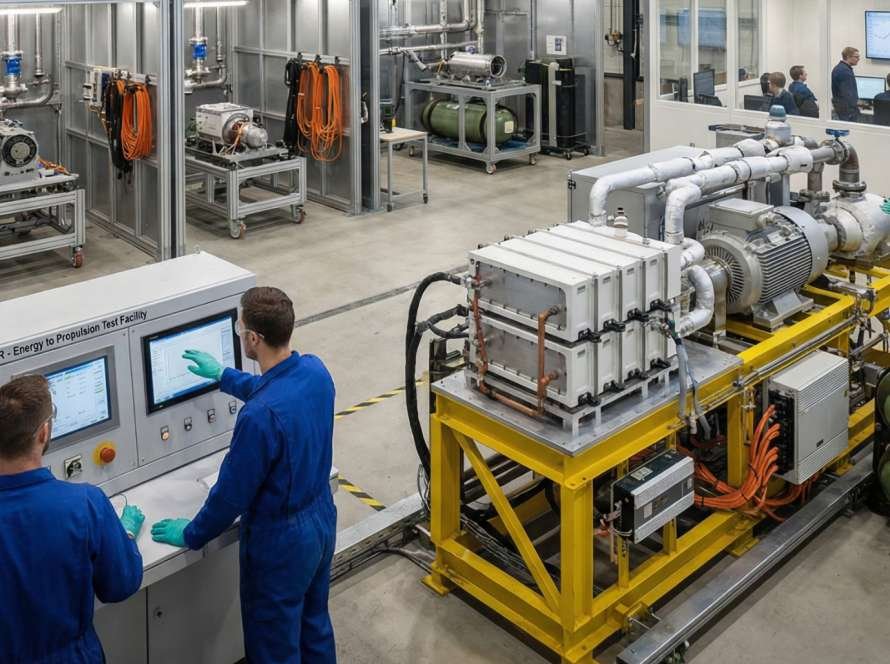
Construction leverages modular designs and scalable power systems to enable faster, more efficient deployment.
Operation relies on predictive analytics, cybersecurity, and intelligent energy management to ensure reliability and cost control.
This integrated mindset ensures that every stage from grid to stack is aligned around performance, transparency, and resilience.
The Digital Backbone
Digitalization has become the unseen catalyst of hydrogen’s next leap forward. Real-time monitoring, AI-based forecasting, and predictive maintenance reduce downtime and enhance safety. Data-driven transparency builds the trust that investors and regulators need to support billion-dollar projects.
The result is confidence that hydrogen projects can scale, interconnect, and deliver on their financial and environmental promises.
The Road Ahead
Hydrogen’s progress is accelerating, but momentum is fragile. Without a modernized and digitalized infrastructure backbone, deployment could stall just as the world begins to depend on it.
The lesson from Copenhagen was clear: infrastructure is not just a supporting system. It is the launchpad of the hydrogen economy.
To realize hydrogen’s full potential, governments, investors, and innovators must align on a single principle. Production is only the beginning. It is the network beneath, the wires, pipes, data, and policies, that will determine whether hydrogen powers the next century or remains a missed opportunity.